


Most small businesses spend their marketing money finding new customers. Very little goes to bringing back the ones who already liked them enough to pay once.
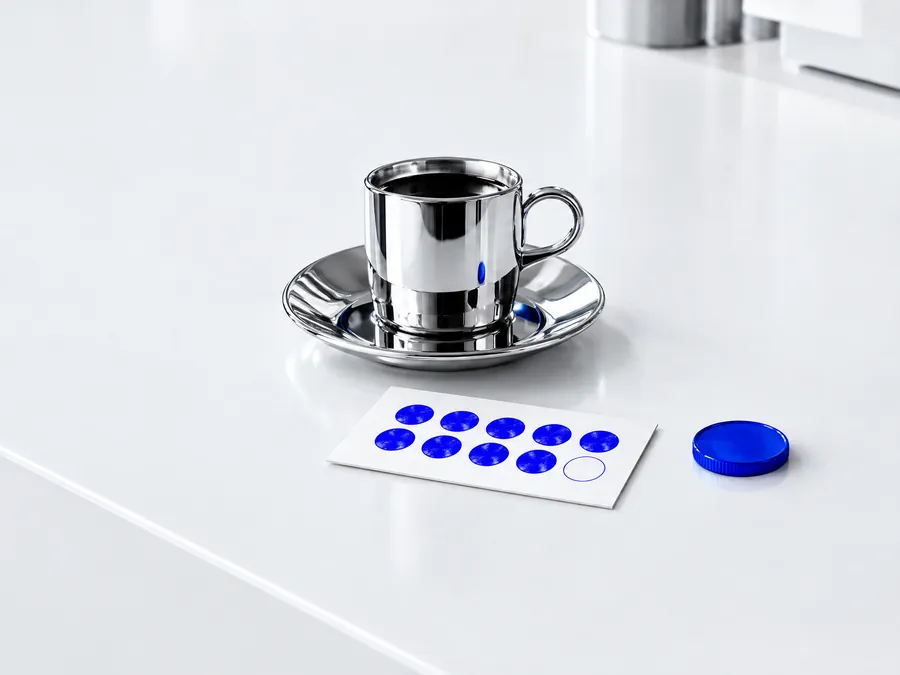
That is backwards, and the numbers show why. But a loyalty program is not magic either. A paper punch card sitting in a drawer does nothing. The programs that work share a few rules, and they are easy to follow once you know them.
The math behind repeat customers
Two findings get quoted in almost every article on this topic. Both are worth knowing, along with their limits.
- Keeping customers is cheaper than finding them. Harvard Business Review summarized it this way in 2014: acquiring a new customer costs anywhere from 5 to 25 times more than keeping an existing one, depending on which study you believe and what industry you are in.1
- Small retention gains can move profit a lot. Research from Bain & Company, led by Frederick Reichheld, found that raising customer retention by 5 percent raised profits by 25 to 95 percent across the industries studied.2 That work dates to 1990 and focused on service and financial firms, so treat the range as directional, not a promise for your shop.
You may also see a claim that the chance of selling to an existing customer is 60 to 70 percent, versus 5 to 20 percent for a new one. It is widely repeated and usually credited to the book Marketing Metrics, but we could not trace it to an underlying study, so we treat it as a rule of thumb.
The takeaway holds up without it: a regular who comes back one extra time a year is usually the cheapest revenue you can get. Our free loyalty ROI calculator shows what that one extra visit is worth for your numbers.
What the loyalty data actually shows
Consumers say they want loyalty programs. In the 2026 Bond Loyalty Report, a survey of more than 20,000 U.S. program members, 85 percent said they are more likely to keep doing business with a brand that has a loyalty program, and 73 percent said they spend more because of it.3
Transaction data points the same way. Square reports that customers enrolled in a Square Loyalty program spend 53 percent more and visit 40 percent more often than other customers, based on its 2022 data. For food and drink businesses, members visited 57 percent more often.4
Why most small-business programs fail
If the idea works, why do so many programs fizzle? In our experience, the causes are almost always operational, not strategic.
The reward takes too long
In a 2025 survey of more than 1,000 active loyalty users by Digitas and Fetch, 40 percent said they abandon programs when rewards take too long to earn, and 81 percent said speed to a reward matters.5 A "buy 20, get one free" card feels like homework.
The rules are too strict
Square's guidance to its sellers is that at least 80 percent of transactions should earn a point or stamp, and that customers should reach some kind of reward within 30 days. Its data suggests strict earning rules discourage people from engaging at all.6
Nobody asks at checkout
The most common failure we see is simple: staff forget to offer it. A program no one mentions has no members. This is a training and scripting problem, and it is fixable in an afternoon.
There is no follow-up
Paper cards cannot send a reminder. They cannot tell you who stopped coming. A program that only rewards the customers who remember it exists misses the whole point, which is bringing back the ones who are drifting.
Five rules for a program that pays
- Make the first reward reachable in about a month. Match it to your natural visit rhythm. A salon client who comes every three weeks should earn something by visit two or three.
- Make the reward worth wanting. Square suggests rewards worth at least about 10 percent of what a customer spends to earn them.6 A free add-on service often feels bigger than it costs you.
- Make joining take ten seconds. A phone number or QR scan at the counter. No app download. Cards that live in Apple Wallet or Google Wallet.
- Automate the reminders. "Two visits to your free service" and "we miss you" texts do the work your staff cannot. Get opt-in consent and follow texting rules.
- Measure three numbers. Members, repeat visit rate, and revenue from members. If they do not move in 90 days, change the reward, not the idea.
Which businesses benefit most
Loyalty programs pay off fastest for businesses with frequent, repeatable visits and a customer who could easily go elsewhere:
- Salons, nail studios, and barbers: regular fill and cut cycles make rewards easy to time.
- Dog groomers: "groom 5, get the 6th free" is simple and rebooks the next visit.
- Cafes and quick-service restaurants: high frequency, low ticket, lots of competition next door.
- Retail and boutique fitness: tiers, early access, and member events build habit.
They are harder to justify for businesses customers visit once every few years, like roofers or real estate agents. There, referral programs and review requests usually do more.
The short version
Loyalty programs work for small businesses when the first reward comes fast, joining is effortless, staff ask every time, and automated reminders bring back the people who drift. They fail when they are a paper card and a hope.
If you want the program without the busywork, our loyalty team designs, installs, and runs custom rewards programs for local businesses, with the customer list always yours.
Sources
- Amy Gallo, "The Value of Keeping the Right Customers," Harvard Business Review, October 2014.
- Frederick Reichheld and W. Earl Sasser, "Zero Defections: Quality Comes to Services," Harvard Business Review, 1990; summarized in Reichheld and Schefter, "E-Loyalty," Harvard Business Review, 2000.
- The 2026 Bond Loyalty Report, with Visa. 20,591 U.S. loyalty program members, January to March 2026.
- Square Loyalty product data, based on global Square Loyalty 2022 data.
- Digitas and Fetch loyalty research, October 2025. 1,000+ active loyalty program users.
- Square, "How to build a successful loyalty program," 2025.